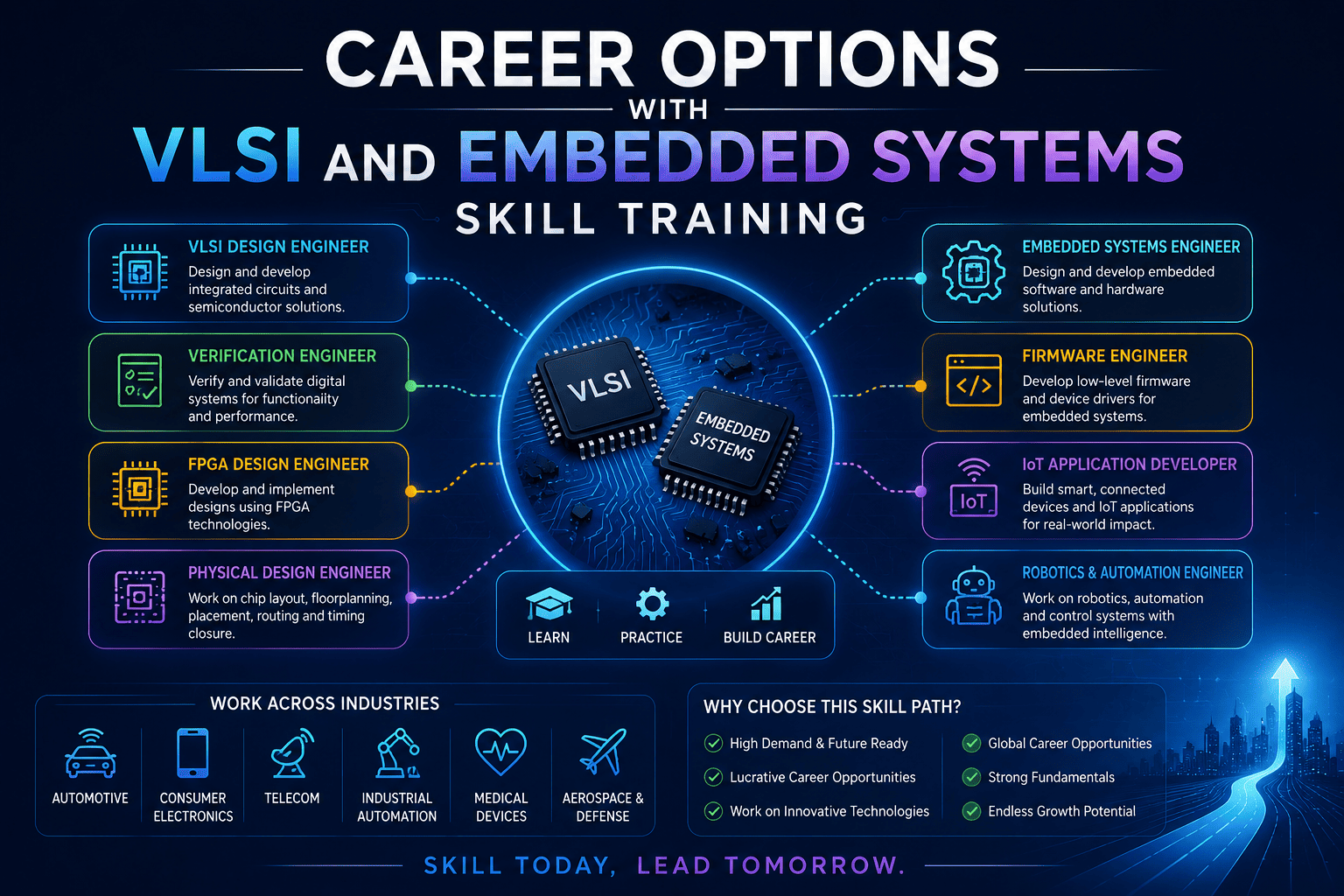
The semiconductor and embedded systems industries are dynamic fields that power a vast array of modern technologies—from smartphones and automotive systems to industrial automation and IoT (Internet of Things) devices. With the right skill training in VLSI (Very Large Scale Integration) and Embedded Systems Design, you can position yourself at the forefront of innovation, taking on roles that blend engineering ingenuity, problem-solving, and creativity. Here's an in-depth look at the career paths that await you.
1. VLSI Design and Engineering Roles
Digital IC Design Engineer
- Role
- Design and develop digital integrated circuits using hardware description languages like Verilog or VHDL.
- Focus
- Logic design, timing analysis, power consumption optimization, and synthesis.
- Industries
- Consumer electronics, communications, and computing.
Analog/Mixed-Signal Design Engineer
- Focus
- Signal processing, component modeling, noise reduction.
- Industries
- Automotive, medical, communications.
Physical Design/Layout Engineer
- Role
- Translate circuit designs into physical layouts on silicon chips.
- Focus
- Placement optimization, routing, and ensuring minimal interference between components.
- Industries
- Semiconductor manufacturing and microprocessor design.
Verification and Validation Engineer
- Role
- Test and verify the functionality of VLSI designs through rigorous simulations and testing protocols.
- Focus
- Functional verification, simulation-driven testing, and compliance with design specifications.
- Industries
- All sectors utilizing VLSI—ensuring robust and error-free products.
Design for Test (DFT) Engineer
- Role
- Implement strategies to efficiently test the fabricated chips.
- Focus
- Building testability into the design, developing fault diagnosis techniques, and ensuring high yield.
- Industries
- Semiconductor fabrication, quality control, and R&D teams.
2. Embedded Systems Design Careers
Embedded systems design is a field where software meets hardware to control and monitor complex systems. Here's how you can channel your expertise:
Embedded Firmware Engineer
- Role
- Develop low-level software that interacts directly with hardware components.
- Focus
- Writing efficient, optimized code in languages like C or C++ for microcontrollers and SoCs.
- Industries
- Consumer electronics, telecommunications, automotive, and aerospace.
Systems Integration Engineer
- Role
- Integrate various hardware and software components to build cohesive, functional systems.
- Focus
- Debugging issues, system testing, and ensuring seamless operation between integrated components.
- Industries
- Robotics, industrial automation, smart homes, and IoT platforms.
Hardware-Software Co-Design Engineer
- Role
- Bridge the gap between hardware design and software application, ensuring they work in harmony.
- Focus
- Simultaneous development, optimization, and validation of hardware and software interfaces.
- Industries
- High-performance computing, embedded systems, and real-time processing applications.
IoT Solutions Architect
- Role
- Design end-to-end IoT systems by integrating embedded hardware with cloud-based services.
- Focus
- Security protocols, data communication, interoperability, and system scalability.
- Industries
- Smart cities, healthcare, agriculture, and energy management.
3. Cross-Industry Opportunities
The skills you develop in VLSI and Embedded Systems Design open doors across multiple sectors:
- Automotive Electronics: Develop advanced driver-assistance systems (ADAS), infotainment units, and autonomous vehicle components.
- Medical Devices: Design precision instrumentation for diagnostics, imaging, and wearable health monitoring devices.
- Consumer Electronics: Engineer smartphones, tablets, wearables, and smart devices that demand power efficiency and cutting-edge performance.
- Telecommunications: Work on network infrastructure, base station designs, and next-generation connectivity solutions.
- Industrial Automation: Create embedded systems that enhance manufacturing processes, robotics, and real-time monitoring/control systems.
4. Enhancing Your Career Trajectory
The right training doesn't just teach you technical skills—it also prepares you for leadership and innovation. Consider these career-enhancing opportunities:
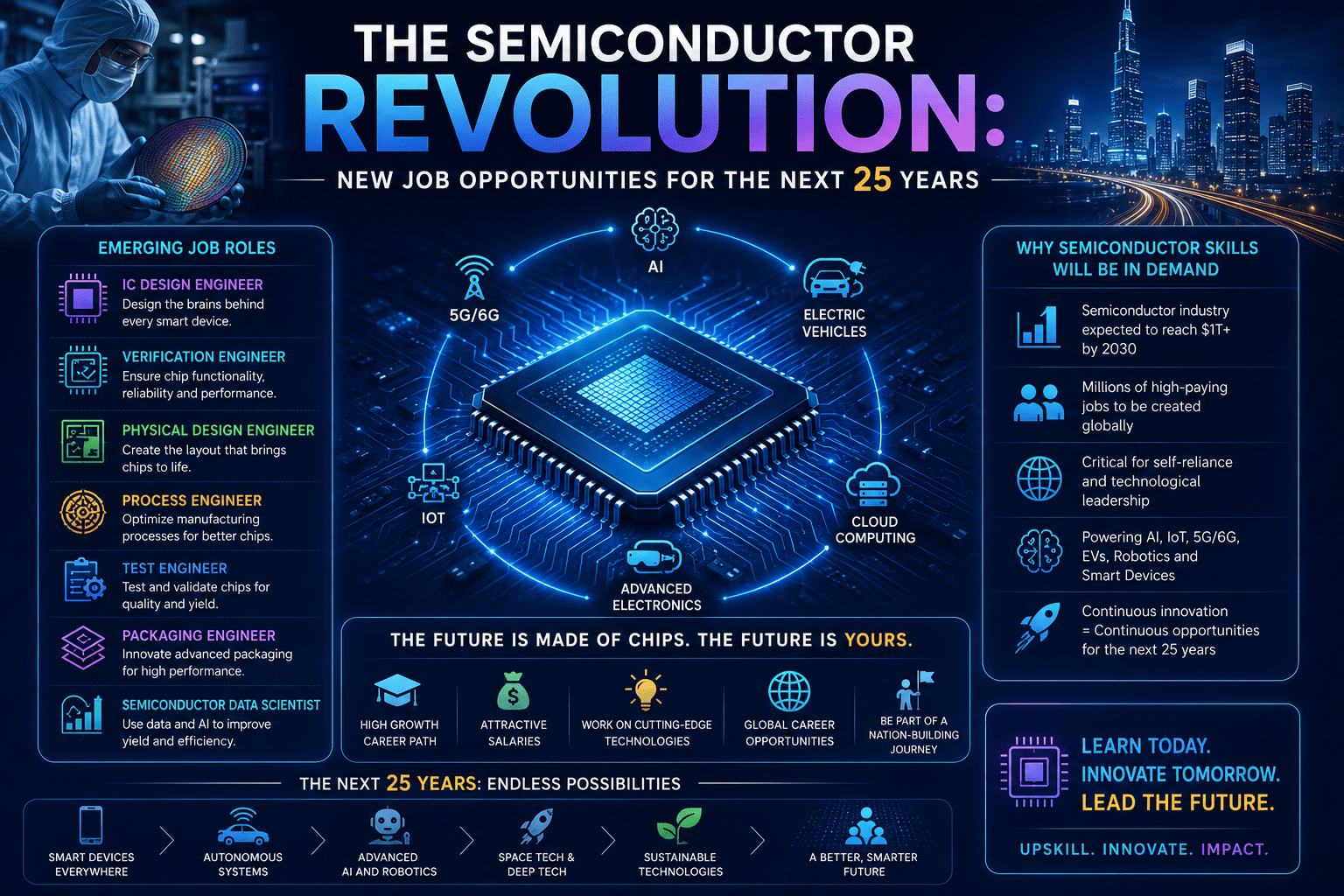
- Advanced Certifications & Specializations: Acquire credentials in specific areas such as Low Power Design, High-Speed Digital Design, or IoT Security to boost your marketability.
- Research and Development: Engage in R&D projects that align with emerging technologies like AI-driven chip design, quantum computing hardware, or next-generation sensor technology. Such roles not only challenge you but also propel the industry forward.
- Consulting and Entrepreneurship: With extensive expertise in VLSI and Embedded Systems, you can venture into consulting, advising startups and established companies alike, or even spearheading your own venture in the high-tech space.
5. Career Options at a Glance
| Career Path | Key Responsibilities | Industries |
|---|---|---|
| Digital IC Design Engineer | HDL coding, logic design, timing analysis | Consumer electronics, computation, communications |
| Analog/Mixed-Signal Design | Signal processing, component modeling, noise reduction | Automotive, medical, communications |
| Physical Design/Layout Engineer | Chip layout optimization, cell placement, routing | Semiconductor manufacturing, microprocessor design |
| Verification Engineer | Simulation, validation, testbench development | All semiconductor sectors |
| Embedded Firmware Engineer | Low-level coding, hardware interfacing, real-time OS design | Consumer electronics, automotive, aerospace |
| Systems Integration Engineer | Hardware-software integration, debugging, system testing | Robotics, IoT, industrial automation |
| IoT Solutions Architect | End-to-end system design, cloud integration, security protocols | Smart cities, healthcare, energy management, agriculture |
More articles

Turn this into your career
See the courses that prepare you for these roles, or ask our counsellor which one fits you.